 Scavenger Hunt App & Interactive City Tours | Globe Chaser


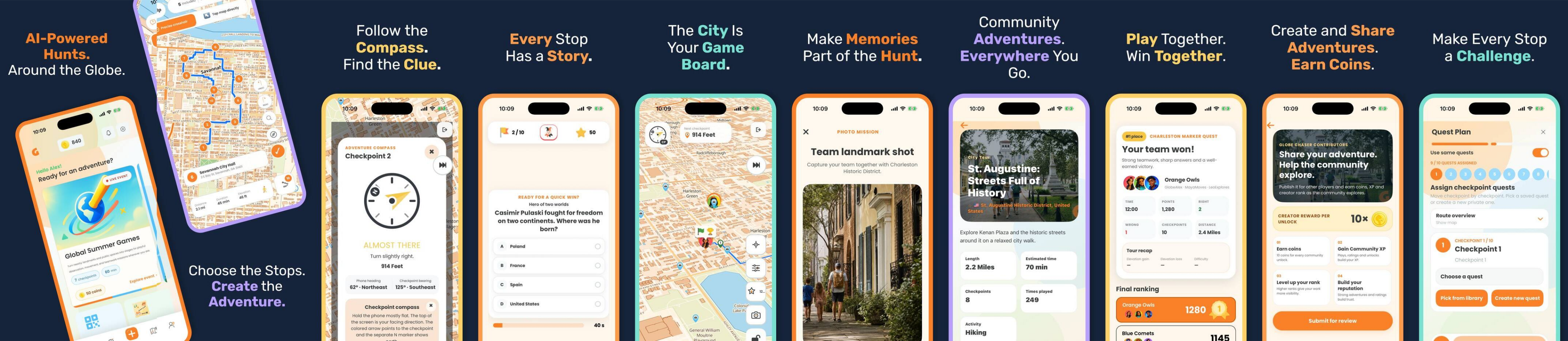
Give hotel guests a neighborhood welcome they can experience at their own pace: build a short, walkable hunt that begins at the property, introduces nearby places, and ends with a clear sense of discovery. You need a realistic route, clear checkpoints, and a simple upkeep routine. Globe Chaser organizes that route with checkpoints, quests, and photo challenges your team can refresh as the neighborhood changes.
Why a neighborhood hunt works as a welcome
A lobby map tells guests where things are; a hunt gives them a reason to notice those places. It should feel like a friendly invitation to step outside. Guests might find a public sculpture, compare storefront details, photograph a doorway, and pause at a park before returning for dinner.
Keep the experience compact. As a starting brief, aim for 45–75 minutes including walking, tasks, and a short rest; verify that estimate with trial guests. Start and finish near the hotel, and build in one obvious stopping point where a guest can rest, refill water, or choose to head back. For broader guidance on using an app to explore a new destination, see how to use a scavenger hunt app to explore a new city.
Design the route around a guest’s first hour outside
Walk the route at the time guests will use it. Check crossings, lighting, pavement, noise, and whether each checkpoint can be found without entering a business or blocking a doorway. Choose public details likely to remain in place. Leave No Trace’s planning guidance recommends checking local conditions and matching an outing to the group’s abilities. Apply that check to the whole route, including the return leg.
A useful welcome route has a gentle progression:
| Stop | Guest experience | Task format | Maintenance check |
|---|---|---|---|
| Hotel departure | Understand the mission | One clear opening quest | Recheck lobby directions |
| Nearby landmark | Learn one local detail | Observation question | Confirm sign or feature |
| Small green space | Take a breather | Photo challenge | Check access and seating |
| Independent business district | Get oriented | Detail hunt from the sidewalk | Confirm hours are not required |
| Return landmark | Feel accomplished | Final checkpoint | Review route timing |
Write tasks around what guests can see. “Find the blue door with the brass number” is more useful than “Explore the historic quarter.” If a feature could be confused with another, add a landmark, direction, or distinctive shape. Avoid buying something, interrupting staff, or photographing strangers.
Build the hunt in Globe Chaser
Create the route as a sequence of checkpoints. Give every checkpoint a plain name, a short orientation line, and one action. Use quests for observation or deduction and photo challenges when an image can prove the moment without capturing identifiable people.
These sample prompts illustrate the format; replace the landmarks and answers with details you have checked on your own route:
- Start at the front door: “Take the first left after leaving the hotel and find the street sign with a painted border.”
- Landmark checkpoint: “What shape repeats in the ironwork above the entrance? Choose the matching answer.”
- Park photo challenge: “Photograph the public mosaic from the path, keeping passersby out of frame.”
- Corner quest: “Find the number shared by the blue awning and the nearby historic plaque.”
- Return checkpoint: “At the final stop, name the detail you would point out to another guest visiting this neighborhood.”
Test each prompt on a phone while walking. A guest should know what to do after one read; put directions before the puzzle.
Before promoting the activity, test how a new guest joins and reaches the right start point. Confirm the commercial setup with Globe Chaser and tell guests whether the activity is included in their stay or carries a separate charge. Keep the front desk’s instructions consistent with what guests actually see on their phones.

Give guests a two-minute briefing
A card at check-in or a staff script should cover four points: stay on public paths, follow traffic signals, respect residents and businesses, and return if conditions feel uncomfortable. Explain the duration and finish point. Ask guests to photograph places or objects, leaving people out whenever possible.
Offer a route overview before guests leave so they can choose suitable shoes and time. If someone needs a different pace, help them plan a safe return to the hotel. Make clear that returning early may leave the adventure incomplete; guests should not feel obliged to finish when the outing no longer suits them.
Keep a repeatable activity fresh
Assign one person to review the route after construction, festivals, severe weather, or business changes. Walk every leg, replace temporary-display clues, and check that photo prompts still work from a safe place. Record the last walk-through date.
Rotate one or two checkpoints seasonally while keeping the route familiar. A fall version might use a window display; a spring version might use a public garden feature. Keep a simple staff log with the date checked, the changed feature, and the next review date. Do not wait for a guest complaint to discover that a clue no longer works.
A practical first launch
Start with five stops within a comfortable walk of the hotel. Have two staff members complete the route separately, then ask willing guests to flag confusing instructions. Revise the wording, brief the front desk, and publish when everyone can explain the start and finish.
Choose Globe Chaser to turn a hotel recommendation into an outdoor adventure guests can actively explore. Explore the Globe Chaser app, test one compact welcome route, and give your front desk a clear way to introduce it.