 Scavenger Hunt App & Interactive City Tours | Globe Chaser

The right scavenger hunt length depends on the people, place, and purpose. A quick 30-minute route can energize a meeting. A 60-minute adventure gives a group room to explore and solve. A 90-minute session allows more time for a neighborhood story, a longer route, and a proper finish.
Treat the advertised length as a session budget, not a promise that every group will move at the same pace. Walking, reading, taking photos, finding a landmark, and discussing an answer all use time. Your best plan gives those activities a clear share of the clock and leaves a little room to recover when a clue takes longer than expected.
Start with the experience you want
Before choosing a duration, write one sentence describing the finish you want. “Teams complete a lively route and celebrate together” needs a different plan from “Families notice three historic details at an easy pace.” The sentence helps you choose challenge density, route distance, and the amount of conversation.
Then consider your group. Colleagues may be comfortable with a brisk sequence of tasks. Families may need snack, restroom, or regrouping time. Couples and friends often want space for photos and spontaneous stops. If you are organizing a larger team, this large-group scavenger hunt planning guide can help you think through teams, meeting points, and instructions.
A practical 30/60/90-minute budget
The checkpoint counts below are illustrative planning examples, not platform limits. They show how much activity can fit when you protect time for briefing and wrap-up.
| Stage | 30 minutes | 60 minutes | 90 minutes |
|---|---|---|---|
| Briefing | 4 min | 7 min | 8 min |
| Walking and finding | 10 min | 22 min | 32 min |
| Solving and discussion | 8 min | 18 min | 28 min |
| Breaks and buffer | 5 min | 7 min | 12 min |
| Finish | 3 min | 6 min | 10 min |
| Illustrative checkpoints | 3 | 5 | 7 |
| Total | 30 min | 60 min | 90 min |
These are activity budgets, not a universal formula. The breaks-and-buffer row protects time for a restroom stop, regrouping, or a clue that takes longer than expected. For 30 minutes, keep the briefing on site and make the route compact. For 60 minutes, mix short moves with a few clues that invite conversation. For 90 minutes, plan a natural midpoint such as a plaza, café area, or scenic pause.

Test the route at the group’s real pace
There is no universal walking speed for a scavenger hunt. A route that feels short to a person walking alone may take much longer with children, a large group, uneven surfaces, photo stops, or a clue that needs rereading. Walk the route yourself while doing the actual tasks. Record the time from the start instruction to the moment you can confidently submit each answer.
Run a small trial with the same kind of participants you expect. Ask them to move naturally, talk, and pause. Add time for the slowest common step rather than timing only the fastest person. Leave No Trace offers similar plan-ahead guidance for matching activities to participants, terrain, and weather. If a 60-minute trial uses 34 minutes for walking and finding, cut a move or shorten the route until it fits the 22-minute walking budget, then retest.
Separate session duration from app settings
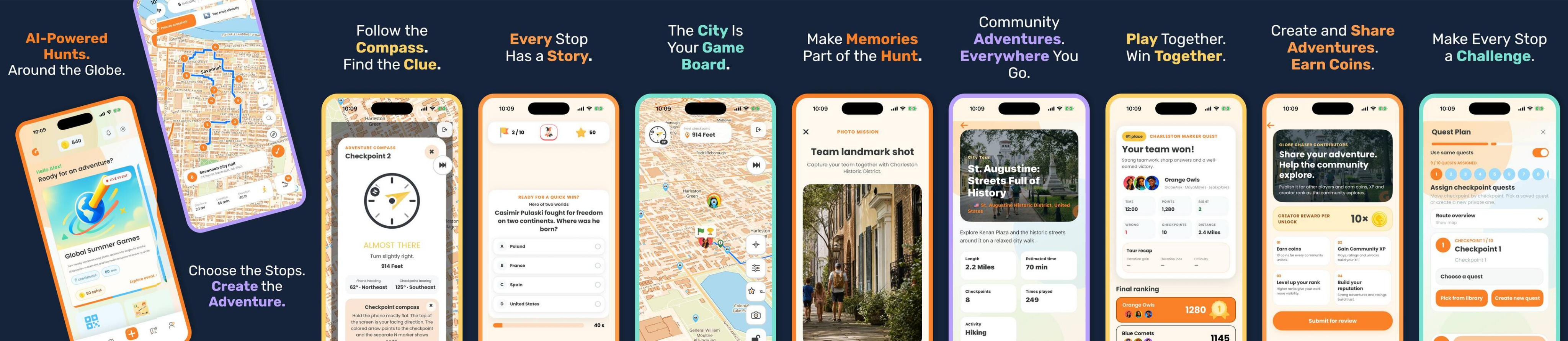
In Globe Chaser, duration is one of the inputs you can choose when creating an adventure. Treat that input as a planning target. The total event also includes your briefing and closing activity. For the 60-minute example above, reserve 13 minutes for those two stages and use the remaining 47 for walking, solving, breaks, and buffer. Test the result: five checkpoints can take very different amounts of time depending on the route and group.
Set the adventure first, then test its actual timing. Avoid promising that every team will finish at the exact minute. Prepare a short hint the host can offer when a group is stuck, and identify a safe regrouping point where teams can compare progress.
Choose challenge density with care
A short event benefits from clear, answerable clues. Use one idea per checkpoint and avoid a puzzle that requires a long explanation. In a 60-minute outing, alternate observation, navigation, and conversation so the experience does not feel like a worksheet. In a 90-minute route, use a theme to make the additional time feel purposeful: local food, architecture, company values, or a neighborhood story.
Plan the finish before you write the final clue. The three-minute finish in the short plan can cover one shared highlight and a quick celebration. A longer event deserves a proper debrief, team photo, or prompt that asks what people noticed. The closing moment turns a route into a shared activity.
A simple timing worksheet
Write down the start and end time for each stage: briefing, each walking segment, each clue, and the wrap-up. Circle any stage that ran over budget. The fix may be a shorter route, clearer wording, fewer checkpoints, or more regrouping time. Keep the learning for your next version rather than adding pressure to participants during the event.
A good scavenger hunt leaves people feeling that the clock supported the adventure. Whether you choose 30, 60, or 90 minutes, make the route fit the group you actually have, test the full sequence, and reserve time for a satisfying finish.
For a workplace event, choose Globe Chaser for location-based adventures with checkpoints, puzzles, and guided movement; its corporate offering includes tools for creating your own events and a fully managed option for one-off outings. Plan a team adventure with Globe Chaser after testing the route against your chosen session length.